

BCSRIF Elephant Hill Wildfire Riparian Restoration Project
The Elephant Hill Fire Riparian Restoration Project is over 4 years and funded through the BC Salmon Restoration Innovation Fund in the amount of $2.6 million.
The Elephant Hill Fire Riparian Restoration project will enhance habitat and riparian conditions for salmonid species in the Thompson Watershed. The project’s goals are to improve water quality and temperatures, supporting the recovery of endangered Thompson River Steelhead and salmonid species in the Bonaparte and Thompson River watershed. The project will involve a restoration over a broader part of the Elephant Hill fire-impacted area and the Secwepemc Nation’s traditional territory to further protect and recover salmonid, Steelhead, and other fish stocks.
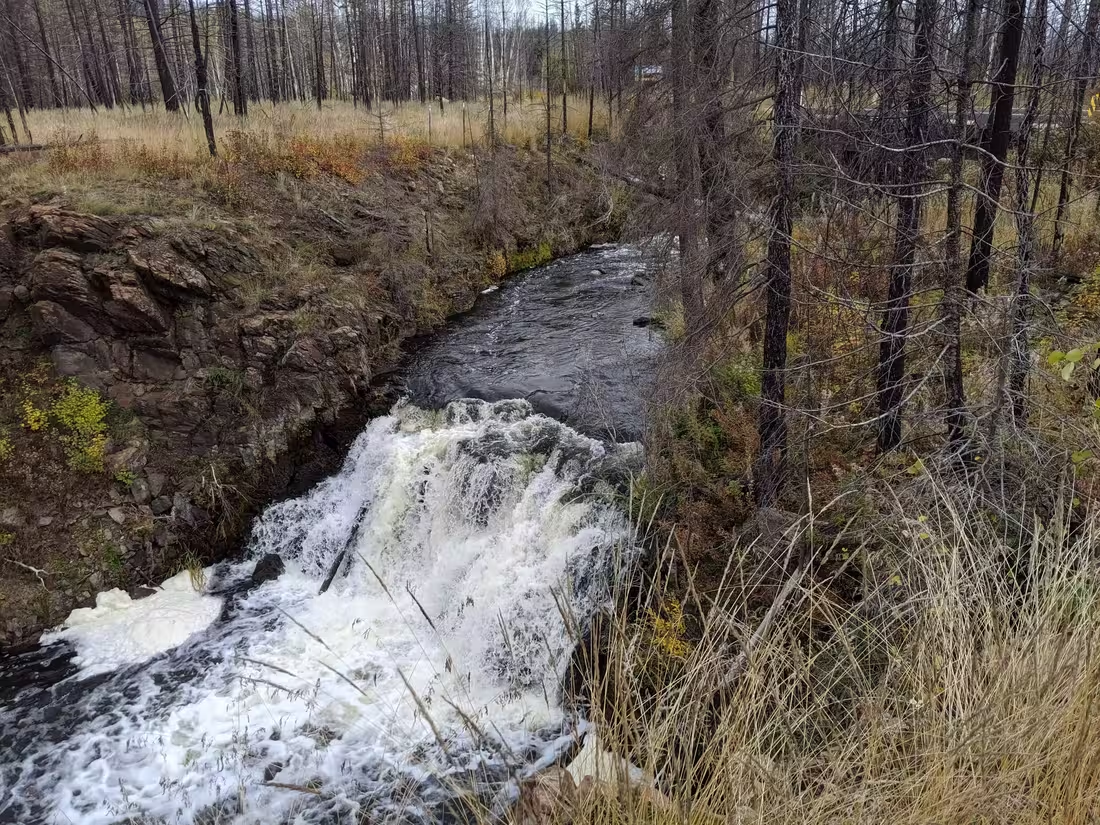
In 2017, the Elephant Hill fire impacted 192,000 ha of the Thompson watershed. Fire intensity was extremely high in many areas, resulting in little to no natural regeneration in many riparian zones. The fire appears to have been hot enough and burned long enough to kill all available seeds, both those in the seedbed and those released from serotinous cones in areas where living pine existed before the fire. As a result, natural recovery from the fire appears likely to be a prolonged process, and treatments are required to restore the riparian area’s tree cover.
The Elephant Hill Fire Riparian Restoration Project is over 4 years and funded through the BC Salmon Restoration The Elephant Hill Fire Riparian Restoration Project is over 4 years and funded through the BC Salmon Restoration Innovation Fund in the amount of $2.6 million.
The Elephant Hill Fire Riparian Restoration project will enhance habitat and riparian conditions for salmonid species in the Thompson Watershed. The project’s goals are to improve water quality and temperatures, supporting the recovery of endangered Thompson River Steelhead and salmonid species in the Bonaparte and Thompson River watershed. The project will involve a restoration over a broader part of the Elephant Hill fire-impacted area and the Secwepemc Nation’s traditional territory to further protect and recover salmonid, Steelhead, and other fish stocks.
In 2017, the Elephant Hill fire impacted 192,000 ha of the Thompson watershed. Fire intensity was extremely high in many areas, resulting in little to no natural regeneration in many riparian zones. The fire appears to have been hot enough and burned long enough to kill all available seeds, both those in the seedbed and those released from serotinous cones in areas where living pine existed before the fire. As a result, natural recovery from the fire appears likely to be a prolonged process, and treatments are required to restore the riparian area’s tree cover.
OBJECTIVES
- Enhance collaboration between First Nations, private landowners, and government and other stakeholders.
- Collect 5-year time series data on pre and post-treatment key water quality indicators in crucial watersheds
- Restore riparian vegetation on fish-bearing and tributary streams that have had high-intensity fire impacts through:
- Use existing high-resolution post-fire aerial photography to assess over 1200 km of riparian areas impacted by the fire and conduct a reach by reach triage of restoration priorities.
- Completing on the ground surveys of an estimated 430 km of high and medium priority stream reaches identified from the remote sensing analysis.
- Revegetation of an estimated 365 km of stream reaches through planting of coniferous and deciduous tree and shrub species and using bioengineering techniques to stabilize banks where required.
- We are modifying in-stream features to improve habitat, spawning, and water quality.
- Engage Secwepemc Guardians, environmental technicians, and skilled labour from various communities, managed by the SRSS and their respective communities in the execution of the program
- Training of Secwepemc technicians for surveys and in-stream habitat improvement interventions